PUBLICATIONS
Discordance Between Balance Ability and Perception Is Associated With Falls in Parkinson's Disease: A Coordinated Analysis
Jason K Longhurst; Andrew Hooyman; Merrill R Landers; Martina Mancini; Erika Franzén; Breiffni Leavy; Hanna Johansson; Daniel Peterson
Neurorehabilitation and Neural Repair
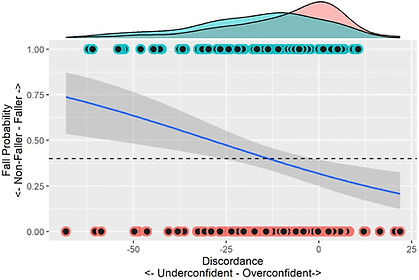

This study investigated whether a mismatch between perceived balance confidence and actual balance performance is associated with falls in people with Parkinson’s disease (PwPD). Falls are common in Parkinson’s disease, yet traditional predictors such as motor severity or balance test scores alone do not fully explain fall risk. The authors proposed that discordance between perception and performance may be a key factor.
Data from five pooled studies involving 244 PwPD were analyzed. Objective balance ability was measured using the Timed Up and Go (TUG) test, while perceived balance confidence was assessed with the Activities-Specific Balance Confidence (ABC) scale. A discordance score was calculated by comparing reported confidence with confidence predicted from TUG performance. Retrospective fall history over 6–12 months was examined.
Results showed that balance discordance was the strongest predictor of falls, even after adjusting for age, sex, disease severity, and objective balance performance. Including discordance significantly improved fall prediction. The study concludes that assessing both balance ability and perception—and their alignment—may improve fall risk identification and guide targeted interventions in Parkinson’s disease.
Dual-Task Performance and Brain Morphologic Characteristics in Parkinson's Disease
2025
Albrecht F, Conklin SJ, Hooyman A, Longhurst JK, Peterson DS, Franzen E. Sedentary behavior modifies the effect of balance rehabilitation on balance discordance in Parkinson’s disease. NPJ Parkinson’s Disease. 2026. 12(1):98. doi:10.1038/s41531-026-01357-0
Conklin S, Albrecht F, Hooyman A, Peterson DS, Franzen E, Longhurst JK. Identifying Predictors of Discordance Between Balance Perception and Ability in Parkinson Disease. Journal of Neurologic Physical Therapy. 2026. Online first. 10.1097/NPT.0000000000000556
Peterson DS, Longhurst JK, Albrecht F, Weller J, Vasquez J, Zarif M, Gudesblatt M, Hooyman A. Discordance in actual and perceived balance ability relates to quality of life and global cognition in a clinical sample of Parkinson patients. Journal of Parkinson’s Disease. 2026. Online first. doi: 10.1177/1877718X261423310
Conklin SJ, Barkley E, Haug J, Chiu YF, Longhurst JK. Examining the Influence of Task Complexity on Dual Task Performance in Parkinson’s Disease and Healthy Older Adults. Nuerodegenerative Diseases. 2026. Online first. doi: 10.1159/00055079
Rathi GN, Gardener A, Longhurst JK, Mari Z, Mishra VR. Machine Learning-Driven Approach to Identify Freezing of Gait in Individuals with Parkinson’s Disease Using Conventional Structural MRI and Clinical Measures. American Journal of Neuroradiology. 2026. Online first. doi: 10.3174/ajnr.A9171
Conklin SJ, Vaikutis L, Loux T, Longhurst JK. The impact of non-motor symptoms on physical activity in Parkinson’s disease. Neurodegenerative Disease Management. 2025. Online first. doi: 10.1080/17582024.2025.2607694
Chiu YF, Longhurst JK, Fletcher A, Loux T. Voice changes during dual task walking in Parkinson’s disease. Journal of Communication Disorders. 2026;119(1):106615. doi: 10.1016/j.jcomdis.2025.106615
Monaghan AS, Takla T, Ofori E, Peterson DS, Wu W, Fritz NE, Longhurst JK. The Neural Contributions to Reactive Balance Control: A Scoping Review of EEG, fNIRS, MRI, and PET Studies. Brain Sciences. 2025; 15 (12): 1330. doi: 10.3390/brainsci15121330
DeMarco E, Lindish J, Held-Bradford E, Longhurst JK. Midlife physical activity, disease symptoms, and quality of life in Parkinson’s disease: a structural equation modeling approach. The Journal of Physical Activity and Health. 2025. Online first. doi: 10.1123/jpah.2024-0583
Longhurst JK, Hooyman A, Albrecht F, Franzen E, Peterson DS. Discordance between balance ability and perception and its relation to falls in Parkinson’s disease: A replication analysis. Neurorehabilitation and Neural Repair. 2025;39(7):555-558. doi:10.1177/15459683251335316
Held Bradford E, Sells M, Doherty M, Longhurst J. Variation in ALS Presentation and Outcomes Based on Phenotype and Physical Therapy Movement System Diagnosis: A Case Series Report. Physiotherapy Theory & Practice. 2025;41(7):1519-1528. doi: 10.1080/09593985.2024.2430745
Stute K, Gosse LK, Montero-Hernandez S, Perkins GA, Yucel MA, Cutini S, Durduran T, Ehlis AC, Ferrari M, Gervaine J, Mesquita CJ, Orihuela-Espina F, Quaresima V, Scholkmann F, Tachtsidis I, Torricelli A, Wabnitz H, Yodh AG, Carp SA, Dehghani H, Fang Q, Fantini S, Hoshi Y, Niu H, Obrig H, Klein F, Artemenko C, Bajracharya A, Barth B, Bartkowski C, Borot L, Bulgarelli C, Buschal D, Choj M, DeFreitas JM, Diprossimo L, Dresler T, Eken A, Elsherif MM, Emberson LL, Exner A, Ferdous TR, Fiske A, Forbes SH, Gemignani J, Gerloff C, Guerin SMR, Guevara E, Hamilton AFC, Hosseini SMH, Jain D, Kerr-German AN, Kong H, Kroczek A, Longhurst JK, Luhrs M, MacLennan RJ, Mehler DMA, Meidenbauer KL, Moreau D, Mutlu MC, Orti R, Paranawithana I, Pinti P, Jounghani AR, Reindl V, Ross NA, Sanchez-Alonso S, Seidel-Marzi O, Shukla M, Syed UA, Talati M, Vergotte G, Yaqu MA, Yu CC, Zainodin H. The fNIRS Glossary Project: A Consensus-based Resource for Functional Near-Infrared Spectroscopy Terminology. Neurophotonics. 2025; 12(2): 027801. doi:10.1117/1.NPh.12.2.027801
Longhurst JK, Hooyman A, Landers MR, Mancini M, Franzen E, Leavy B, Johansson, Peterson DS. Discordance between balance ability and perception is associated with falls in Parkinson’s disease: a coordinated analysis. Neurorehabilitation and Neural Repair. 2025;39(2):114-125. doi:10.1177/15459683241300456
Conklin SJ, Cavalcanti HM, Almeida LRS, Mishra V, Oliveira-Filho J, Mari Z, Landers MR, Longhurst JK. Identifying gait characteristics associated with freezing of gait in Parkinson’s disease: an analysis of on and off medication states. Gait & Posture. 2025; 122: 225-231. doi: 10.1016/j.gaitpost.2025.07.323
2024
Longhurst JK, Chrusciel T, Ahmad SO. Increasing trends in utilization of physical and occupational therapy services in early Parkinson’s disease. Journal of Parkinson’s Disease. 2024. In press.
Carlson SJ, Chiu YF, Landers MR, Fritz NE, Mishra VR, Longhurst JK. Dual-Task Performance and Brain Morphologic Characteristics in Parkinson's Disease. Neurodegenerative Diseases. Published online July 31, 2024. doi:10.1159/000540393
Kim JK, Rider JV, Zinselmeier A, Chiu YF, Peterson DS, Longhurst JK. Dual task gait has prognostic value for cognitive decline in Parkinson’s disease. Journal of Clinical Neuroscience. 2024;126:101-107. https://doi.org/10.1016/j.jocn.2024.06.006
Johnson JK, Longhurst JK, Gevertzman M, Jefferson C, Linder S, Bethoux F, Stilphen M. The use of telerehabilitation to improve movement-related outcomes and quality of life for individuals with Parkinson’s disease: A pilot randomized controlled trial. JMIR: Formative Research. 2024;8:e54599. Published 2024 Jul 31. doi:10.2196/54599
Landers MR, Haller AM, Aldaco A, La B, Babarinde AA, Rider JV, Longhurst JK. The Psychometric Properties of the Modified Fear of Falling Avoidance Behavior Questionnaire in Parkinson’s Disease and Older Adults. Archives of Physiotherapy, 2024;14:11-19. doi: 10.33393/aop.2024.2702.
Rider JV, Manalang KLC, Longhurst JK. Freezing of gait is associated with daily activity limitations among individuals with Parkinson’s disease and mild cognitive impairment. Occupational Therapy in Health Care. 2024; 11:1-15. doi: 10.1080/07380577.2024.2314181
DeMarco E, Longhurst JK, Hinyard L. Exploring relationships between state and trait anxiety and depression in people Parkinson’s Disease and controls: a cross-sectional analysis. Aging and Neurodegenerative Disease. 2024;4(1):2. doi: 10.20517/and.2023.33
2023
Longhurst JK, Rider JV, Cummings JL, John SE, Poston B, Landers MR. Cognitive-motor dual-task interference in Alzheimer’s disease, Parkinson’s disease, and prodromal neurodegeneration: a scoping review. Gait & Posture. 2023. 105(September):58-74. doi: 10.1016/j.gaitpost.2023.07.277
Longhurst JK, Sreenivasan KR, Kim J, Cummings JL, John SE, Poston B, Cordes D, Rider JV, Landers MR. Cortical thickness is related to cognitive-motor automaticity in individuals with Alzheimer’s disease: a regions of interest study. Experimental Brain Research. 2023;241(6):1489-1499. doi: 10.1007/s00221-023-06618-5
Sreenivasan KS, Bayram E, Zhuang X, Longhurst JK, Yang Z, Cordes D, Ritter A, Caldwell JZ, Cummings JL, Mari Z, Litvan I, Stover N, Bluett B, Mishra V. Topological reorganization of functional hubs in Parkinson’s disease patients with freezing of gait. Journal of Neuroimaging. 2023;33(4):547-557. doi: 10.1111/jon.13107
Ahmad SO, Longhurst JK, Stiles D, Downard L, Martin S. A meta-analysis of exercise intervention and the effect on Parkinson’s Disease symptoms. Neuroscience Letters. 2023;28:801:137162. doi: 10.1016/j.neulet.2023.137162
Rider JV, Longhurst JK, Young D, Navalta J, Landers MR. Psychological Contributions to Fear of Falling Avoidance Behavior in Parkinson's Disease. Journal of Geriatric Psychiatry and Neurology. 2023;36(3):2-15-224. doi: 10.1177/08919887221119974
Rider JV, Longhurst JK, Young D, Navalta J, Landers MR. Fear of Falling Avoidance Behavior in Parkinson's Disease: Most Frequently Avoided Activities. OTJR: Occupation, Participation and Health. 2023;43(2):228-236. doi: 10.1177/15394492221106103
2022
Longhurst JK, Rider JV, Cummings JL, John SE, Poston B, Held-Bradford E, Landers MR. A novel way of measuring dual-task interference: the reliability and construct validity of the dual-task effect battery in neurodegenerative disease. NeuroRehabilitation and Neural Repair. 2022;36(6):346-359. doi: 10.1177/15459683221088864
Rider JV, Longhurst JK, Lekhak N, Young D, Landers MR. Fear of falling activity avoidance behavior among individuals with Parkinson's disease: a scoping review. Research and Reviews in Parkinsonism. 2022;12:1-17 doi: 10.2147/JPRLS.S350890
Longhurst JK, Cummings JL, John SE, Poston B, Rider JV, Salazar AM, Mishra VR, Ritter A, Caldwell JZ, Miller JB, Kinney JW, Landers MR. Dual task performance is associated with amyloidosis in cognitively healthy adults. Journal of Prevention of Alzheimer's Disease. 2022;9(2):297-305. doi: 10.14283/jpad.2022.1
Longhurst JK, Eckard K, Hammar R, Vukojevic F, Campbell J, Rider J, Landers MR. Factors predicting fear of falling avoidance behavior in parkinsonisms. NeuroRehabilitation. 2022;50(1);65-73. doi: 10.3233/NRE-210267

Dr. Sarah Conklin: First Place - PhD student Oral Presentation Jonathan Haug: First Place - Graduate Student Poster Presentation

Poster Presentation

Poster Presentation
Dr. Sarah Conklin: First Place - PhD student Oral Presentation Jonathan Haug: First Place - Graduate Student Poster Presentation
PEER REVIEWED POSTER PRESENTATIONS – NATIONAL AND REGIONAL
Conklin S, Li K, Chiu YF, Schwarz L, Soudagar Turkey M, Longhurst J. Fear of Falling Avoidance Behavior Is Related to Cognition, Anxiety, and Dual-Task Ability in Parkinson’s Disease. APTA 2025 Combined Sections Meeting, Houston, TX, February 13-15, 2025.
Barkley E, Carlson S, Walker D, Schwarz L, Soudagar Turkey M, Chiu YF, Longhurst J. Prefrontal Cortex Activity during a Cognitive Motor Dual Task Is Associated with PD Motor Severity. APTA 2025 Combined Sections Meeting, Houston, TX, February 13-15, 2025.
Carlson S, Longhurst J. Linking Sedentary Behavior to Avoidance Behavior, Dual-Task Performance, and Quality of Life in Parkinson’s Disease. APTA 2025 Combined Sections Meeting, Houston, TX, February 13-15, 2025.
Pool M, Patel S, Schwarz L, Soudagar Turkey M, Chiu YF, Longhurst J. Complexity Matters: Cortical Activity and Gait during Differing Complexities of Cognitive-Motor Dual-Tasking in Parkinson’s Disease. APTA 2025 Combined Sections Meeting, Houston, TX, February 13-15, 2025.
Schein S, Longhurst J. Direction specific cortical control of automatic postural responses in Parkinson’s disease: A preliminary analysis. American Academy of Physical Medicine and Rehabilitation Annual Assembly, San Diego, CA, November 6-10, 2024.
May A, Schwarz L, Soudagar-Turkey M, Longhurst JK, Chiu YF. Cognition influences speech pausing across dual task complexity in Parkinson’s Disease. Annual Convention of the American the American Speech-Language-Hearing Association, Seattle, WA, December 2024.
Chiu Y-F, Longhurst JK, Loux T, Schwarz L, Soudagar-Turkey M. Dual task effect on oral diadochokinesis and gait in Parkinson’s disease. 22nd Biennial Conference on Motor Speech, San Diego, California, February 21-24, 2024.
Gevertzman M, Johnson J, Longhurst JK, Linder S, Bethoux F, Stilphen M. Telerehabilitation for Parkinson’s Disease – a Pilot Randomized Clinical Trial. APTA 2024 Combined Sections Meeting, Boston, Massachusetts, February 15-17, 2024.
Carlson S, Codd K, Rider JV, Landers MR, Longhurst JK. Fear of Falling Avoidance Behavior Is Related to Balance Characteristics Among Individuals with Parkinson's Disease. APTA 2024 Combined Sections Meeting, Boston, Massachusetts, February 15-17, 2024.
Kim JJ, Rider JV, Fordonski A, Chiu YF, Longhurst, JK. Dual Task Gait Predicts Cognitive Decline in Parkinson’s Disease. APTA 2024 Combined Sections Meeting, Boston, Massachusetts, February 15-17, 2024.
Walker D, Chiu YF, Schwarz L, Soudagar-Turkey M, Longhurst JK. The Relationship between Cognition, Fear of Falling Avoidance Behavior, and Backwards Gait. APTA 2024 Combined Sections Meeting, Boston, Massachusetts, February 15-17, 2024.
Ahmad S, Longhurst J, Stiles D, Born J, Scheffler K, Vogel K. Occupationally based exercises compare well with gold standard exercises for patients with Parkinson's Disease: A meta-synthesis. Society for Neuroscience, Washington, D. C., November 13-16 2023.
Fordonski A, Schwarz L, Chiu Y, Longhurst JK. The contributions of executive function to automaticity and attention allocation during dual tasking in individuals with Parkinson’s disease. American Society for NeuroRehabilitation Annual Meeting. Charleston, South Carolina, March 14, 2023.
Gevertzman M, Longhurst JK, Landers MR. The Relationship between Upper and Lower Extremity Dual-Task Performance in Neurologic Disorders. APTA 2022 Combined Sections Meeting, San Diego, California, February 23-25, 2023.
Longhurst JK, Gevertzman M, Rider JV. Attention Allocation and Automaticity: A Proof-of-Concept Study of Divergent Mechanisms in Dual Tasking. APTA 2022 Combined Sections Meeting, San Diego, California, February 23-25, 2023.
Longhurst JK, Carlson S, Chiu Y, Ahmad SO, Landers MR, Fritz N. Thinner Entorhinal, Premotor, Sensorimotor Cortices Are Associated with Poor Dual-Task Performance in Parkinson’s Disease. APTA 2023 Combined Sections Meeting, San Diego, California, February 23-25, 2023.
Landers MR, Haller A, Aldaco A, La B, Rider J, Longhurst J. The modified Fear of Falling Avoidance Behavior Questionnaire in Parkinson’s disease and healthy older adults. APTA 2022 Combined Sections Meeting, San Diego, California, February 23-25, 2023.
Ahmad SO, Longhurst J, Stiles DL, Downard L, Martin S, Dinh H. A meta-analysis of exercise intervention and the effect on Parkinson’s Disease Symptoms. Society for Neuroscience, Proceedings: OASIS. 2022-S1564-SfN. San Diego, CA, November 15-18, 2022.
Rider JV, Longhurst JK, Young D, Navalata J, Lekhak N, Landers MR. Psychological factors associated with fear of falling avoidance behavior in Parkinson's disease. American College of rehabilitation Medicine. Chicago, Illinois, November 8-11, 2022.
DeMarco E, Longhurst J, Hinyard L. Depression is related to anxiety and motor symptoms in People with Parkinson’s Disease. Saint Louis University Graduate Student Association Graduate Research Symposium. St. Louis, Missouri, April 29, 2022.
Rider J, Longhurst J, Navalta J, Young D, Landers M. Fear of falling avoidance behavior in Parkinson’s disease: An analysis of the most frequently avoided activities. Touro University Nevada Research Day, Henderson, Nevada, April 15 2022.
a. Awarded “Best Poster” in Applied and Translational Research
Jacobson KM, Gevertzman M, Longhurst JK. Differences in spatiotemporal gait characteristics between
freezing of gait subtypes in Parkinson disease. 2022 APTA Combined Sections Meeting, San Antonio, Texas, February 2-5, 2022.
a. Awarded “Best Poster” from the Degenerative Disease Special Interest Group
Campbell J, Longhurst JK. High-intensity task-specific physical therapy in non-remitting spinal myoclonus: a case report. 2022 APTA Combined Sections Meeting, San Antonio, Texas, February 2-5, 2022.
PEER REVIEWED POSTER PRESENTATIONS – INTERNATIONAL
Longhurst JK, Conklin SJ, Chiu YF. Dual task elicited premotor and supplementary motor activity as sensitive markers of mild Parkinson’s disease: an fNIRS analysis. International Congress of Parkinson’s Disease and Movement Disorders. Honolulu, Hawaii, USA, October 5-9, 2025.
Chiu YF, Longhurst JK, Fletcher A, Loux T. Exploring the Trade-offs Between Speech and Gait in Parkinson’s Disease. International Congress of Parkinson’s Disease and Movement Disorders. Honolulu, Hawaii, USA, October 5-9, 2025.
Conklin SJ, Peterson DS, Hooyman A, Longhurst JK. Factors contributing to balance discordance and its impact on fear of falling avoidance behavior in Parkinson’s disease. International Congress of Parkinson’s Disease and Movement Disorders. Honolulu, Hawaii, USA, October 5-9, 2025.
Conklin SJ, Hill P, Schwarz L, Chiu YF, Longhurst JK. Examining the Influence of Task Complexity on Dual Task Performance in Parkinson’s disease. International Congress of Parkinson’s Disease and Movement Disorders. Honolulu, Hawaii, USA, October 5-9, 2025.
Conklin SJ, Vaikutis L, Loux T, Schwarz L, Longhurst JK. The Impact of Non Motor Symptoms on Physical Activity in Parkinson’s Disease. International Congress of Parkinson’s Disease and Movement Disorders. Honolulu, Hawaii, USA, October 5-9, 2025.
Conklin SJ, Peterson DS, Hooyman A, Albrecht F, Franzen E, Longhurst JK. Identifying Modifiable Predictors of Balance Discordance in Parkinson’s Disease: Implications for Fall Risk Reduction. International Society of Posture and Gait Research World Congress 2025. Maastricht, Netherlands, June 29 – July 3, 2025.
Rathi, GN, Longhurst JK, Mari Z, Mishra VR. Structural MRI-Based Brain Age Estimation in Parkinson’s Disease: Implications for Freezing of Gait Diagnosis. The 28th International Conference on Medical Image Computing and Computer Assisted Intervention. Daejeon, Korea, September 23-28, 2025.
Rathi GN, Caldwell J, Longhurst J, Mari Z, Mishra VR. Insights into Neural and Cognitive Correlates of Freezing of Gait Through Cortical Myelination Analysis. Organization for Human Brain Mapping Annual Meeting 2025. Brisbane, Australia, June 24-28, 2025.
Rathi GN, Longhurst J, Mari Z, Mishra VR. Exploring Cortical Myelination to Understand Freezing of Gait in Parkinson’s Disease. International Society for Magnetic Resonance in Medicine Annual Meeting. Honolulu, Hawaii, USA, May 10-15, 2025.
Papantonatos C, Carlson SJ, Chiu YF, Fritz NE, Peterson DS, Longhurst JK. The neural contributions to fear of falling avoidance behavior in Parkinson’s disease: preliminary evidence from a mobile neuroimaging paradigm. International Parkinson and Movement Disorders Congress 2024. Philadelphia, PA, USA, September 27 – October 1, 2024.
Gevertzman M, Hooyman A, Longhurst J, Landers M. Apolipoprotein E e4 genotype affects early motor progression in Parkinson’s disease through an effect on cognition. 27th International Congress of Parkinson’s Disease and Movement Disorders, Copenhagen, Denmark. August 27-31, 2023.
Gevertzman M, Hooyman A, Longhurst J, Landers M. Sex differences in motor response to levodopa in early Parkinson’s disease. 27th International Congress of Parkinson’s Disease and Movement Disorders, Copenhagen, Denmark. August 27-31, 2023.
Sreenivasan K, Bayram E, Zhuang X, Longhurst J, Yang Z, Cordes D, Ritter A, Caldwell J, Cummings J, Mari Z, Litvan I, Stover N, Yacoubian, Standaert D, Bluett B, Mishra V. Disrupted topological organization of hubs in Parkinson’s disease patients with freezing of gait. International Society for Magnetic Resonance in Medicine Annual Meeting. Toronto, Canada, June 3-8, 2023.
Mishra V, Longhurst J, Sreenivasan K, Cordes D, Ritter A, Mari Z. White Matter Correlates of Physical Therapy Measures in Parkinson’s disease Patients with Freezing of Gait. International Parkinson and Movement Disorders Congress 2022, Madrid, Spain, September 14-18, 2022.
Longhurst JK, Rider JV, Cummings JL, John SE, Poston B, Landers MR. Cognitive-motor dual task interference in Alzheimer’s disease, Parkinson’s disease, and prodromal neurodegeneration: a scoping review. International Society of Posture and Gait Research World Congress 2022. Montreal, Canada, July 4-7, 2022.
Longhurst JK, Rider JV, Cummings JL, John SE, Poston B, Held-Bradford E, Landers MR. A novel way of measuring dual-task interference: the reliability and construct validity of the dual-task effect battery in neurodegenerative disease. International Society of Posture and Gait Research World Congress 2022. Montreal, Canada, July 4-7, 2022.
Mishra VR, Sreenivasan KR, Longhurst JK, Caldwell J, Ritter A, Mari Z. Understanding correlation between diffusion MRI-derived white-matter organization and neuropsychological measures in Parkinson’s disease patients with freezing of gait. World Congress on Parkinson’s Disease and Related Disorder XXVII. Prague, Chzech Republic. May 1-4, 2022.
Landers MR, Rider JV, Eckard K, Hammar R, Vukojevic F, Campbell J, Longhurst JK. Disease severity and gait velocity are predictive of fear of falling avoidance behavior in parkinsonisms. World Congress on Parkinson’s Disease and Related Disorder XXVII. Prague, Chzech Republic. May 1-4, 2022.
Longhurst JK, Cummings JL, John SE, Poston B, Rider JV, Salazar AM, Mishra VR, Ritter A, Caldwell JZ, Miller JB, Kinney JW, Landers MR. Dual task performance is associated with amyloidosis in cognitively healthy adults. International Conference on Alzheimer’s and Parkinson’s disease and related neurological disorders – AD/PD 2022. Barcelona, Spain. March 15-20, 2022.
Longhurst JK, Sreenivasan KR, Cummings JL, John SE, Poston B, Cordes D, Rider JV, Landers MR. Cortical thickness is related to cognitive-motor automaticity in individuals with Alzheimer’s disease: a regions of interest study. International Conference on Alzheimer’s and Parkinson’s disease and related neurological disorders – AD/PD 2022. Barcelona, Spain. March 15-20, 2022.
Longhurst J, Rider J, Bluett B, Landers M. The effect of levodopa and cognitive-motor dual-task interference on gait parameters for individuals with Parkinson’s disease freezing of gait. 24th International Congress of Parkinson's Disease and Movement Disorders, September 12-16, 2020.
Rider J, Longhurst J, Landers M. Cognitive and functional predictors of ADL performance in persons with Parkinson’s disease. 24th International Congress of Parkinson's Disease and Movement Disorders, September 12-16, 2020.
PEER REVIEWED PLATFORM PRESENTATIONS – NATIONAL AND REGIONAL
Ahmad SO, Longhurst JK, Stiles D, Dillon L, Shorba E. Meta Analysis shows exercise improvement in motor scores, but not cognitive scores in persons with Parkinson's Disease. Society for Neuroscience, Chicago, Illinois, USA. October 5-9, 2024.
DeMarco E, Lindish J, Held-Bradford E, Longhurst JK. The Relationship between Midlife Physical Activity, Disease Symptoms, and Quality of Life in Parkinson’s Disease. APTA 2024 Combined Sections Meeting, Boston, Massachusetts, February 15-17, 2024.
Kim J, Rider JV, Gevertzman M, Chiu YF, Schwarz L, Soudagar-Turkey M, Landers MR, Longhurst JK. Interlimb arm-swing asymmetry during dual-task gait has prognostic value for cognitive decline in Parkinson’s disease. American College of Rehabilitation Medicine 99th Annual Conference. Chicago, Illinois, USA. November 8-11, 2022.
PEER REVIEWED PLATFORM PRESENTATIONS – INTERNATIONAL
Longhurst JK, Hooyman A, Landers MR, Mancini M, Franzen E, Leavy B, Johansson, Peterson DS. Discordance between balance ability and perception predicts falls in Parkinson’s disease: a coordinated analysis and replication. International Society of Posture and Gait Research World Congress 2025. Maastricht, Netherlands, June 29 -July 3, 2025.
Stute K, Gosse LK, Montero-Hernandez S, Perkins G, Yucel MA, The fNIRS Glossary Project Team (includes Longhurst JK). The fNIRS Glossary Project: A Consensus-based Resource for Functional Near-Infrared Spectroscopy Terminology. fNIRS Congress 2024, Birmingham, UK, September 12-15, 2024
Longhurst JK, Cavalcanti HM, Almeida LRS, Oliveira-Filho J, Mishra VR, Landers MR. Cortical thickness of Broca’s area is related to freezing of gait severity in Parkinson’s disease. 4th Pan American Parkinson’s Disease and Movement Disorder Congress, Miami, Florida, May 26-28, 2022.
Longhurst JK, Cavalcanti HM, Almeida LRS, Oliveira-Filho J, Landers MR. On medication gait variability is most associated with off medication freezing of gait severity in people with Parkinson’s disease. 4th Pan American Parkinson’s Disease and Movement Disorder Congress, Miami, Florida, May 26-28, 2022.
Mishra VR, Sreenivasan KR, Longhurst JK, Ritter A, Mari Z. Understanding correlation between diffusion MRI-derived white-matter organization and clinical measures in Parkinson’s disease patients with freezing of gait. World Congress on Parkinson’s Disease and Related Disorder XXVII. Prague, Chzech Republic. May 1-4, 2022.
a. Awarded “Best Presentation” in Basic Neuroscience, Imaging, and Biomarkers Session
Longhurst J, Ritter A, Rider J, Landers M. Physical therapy is associated with improvements in gait and balance in individuals with Lewy Body Dementia: A retrospective analysis. International Lewy Body Dementia Conference 2019, Las Vegas, Nevada, June 24-26, 2019.
SUBSCRIBE TO OUR NEWSLETTER


SOCIAL
© 2024 by IHMS Lab at Saint Louis University